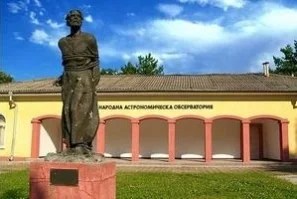
I joined the “Giordano Bruno” National Astronomical Observatory and Planetarium in Dimitrovgrad, Bulgaria when I was eleven, and never really left. The pull was immediate. I worked through every astronomy problem the study group put in front of me, threw myself into national Olympiads and competitions, and spent every clear night I could behind a telescope. Before I had the words for it, I knew this was what I wanted to do.
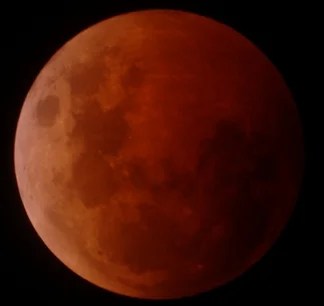
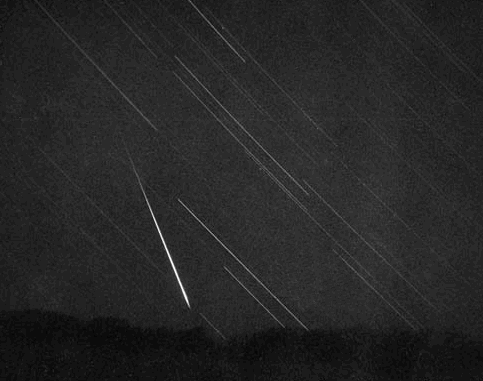
Over the next decade I photographed seven total lunar eclipses and wrote scientific interpretations for most of them. My variable-star observations were published in the bulletin of the French Association of Variable-Star Observers (AFOEV). In 2001 I took first place at the Bulgarian National Science Competition for a paper on the Earth’s shadow geometry during total lunar eclipses. The most memorable build of that period was “Tokamak” — a four-PVC-pipe rig holding thirteen old photographic cameras, pointed every which way to cover the whole sky for meteor monitoring; it worked beautifully on the Perseids and the Leonids. Twice I joined Bulgarian Academy of Sciences teams on total solar eclipse expeditions — Shabla in 1999, and again in 2006 — long days under deep skies that I still measure other observing trips against.
On the strength of my National Astronomy Olympiad result, I entered the University of Sofia without entrance examinations. I took my Bachelor’s in physics and stayed for an M.S. in Astronomy and Astrophysics, defending a thesis on spectroscopic studies of the solar corona during the 2006 total eclipse — the same expedition I had joined with the BAS team a year earlier. I then crossed the Atlantic for a Ph.D. at the University of Toledo, followed by a pre-doctoral fellowship at the Harvard–Smithsonian Center for Astrophysics, where I worked on extragalactic high-energy astrophysics and got hands-on time with X-ray telescope data in earnest. From there I went to George Washington University as a postdoctoral scientist, splitting my time between galactic and extragalactic high-energy astrophysics and education and outreach work that I came to value as much as the science itself. In Fall 2016 I joined the Department of Physics at Texas State University, where I am now Associate Professor.